
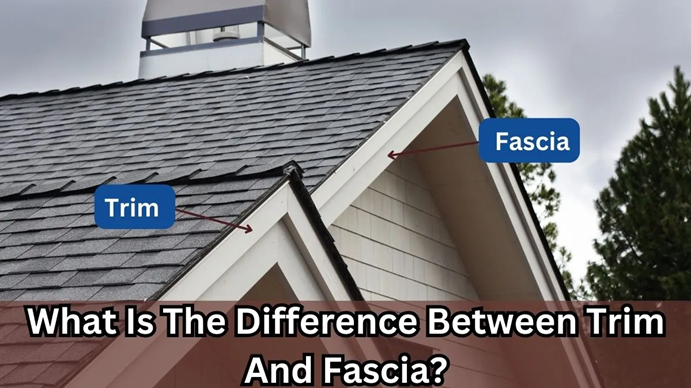
When it comes to the exterior of your home, trim and fascia are two important components, but many homeowners often confuse one for the other. While both play key roles in the overall appearance and functionality of your roofline and exterior, they serve very different purposes. Understanding the distinction between trim and fascia can help homeowners make informed decisions about home maintenance, repairs, and renovations.
In this blog, we’ll break down the differences between trim and fascia, explore their individual functions, and offer guidance on when to replace or maintain them. By the end, you’ll have a clear understanding of what each element does and how it contributes to the integrity and aesthetics of your home.
What Is Trim?
Trim refers to the decorative elements installed around windows, doors, corners, and even along rooflines. Exterior trim is typically made of wood, vinyl, composite, or aluminum, and its primary purpose is to provide a finished, polished look to a home. It helps frame openings and covers gaps between different materials (like where the walls meet the roof). In addition to the aesthetic benefit, trim can also serve as a protective barrier, preventing water from seeping into the gaps and causing damage.
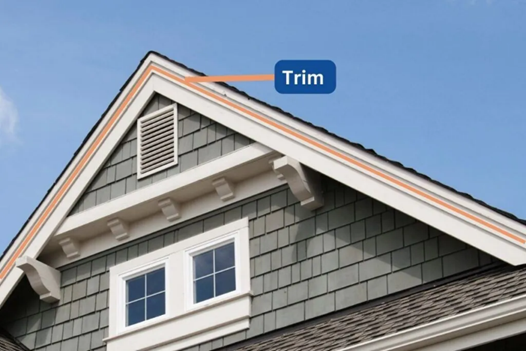
Trim often includes features such as:
- Window trim: The framing around windows.
- Door trim: The decorative elements surrounding doors.
- Corner trim: Pieces that cover the junctions of exterior walls.
- Eave trim: Installed around the edges of the roofline.
Functions of Trim:
- Aesthetic Appeal: Trim is mainly used to enhance the visual appeal of your home. It adds detail and style to otherwise plain architectural features.
- Hiding Seams: It covers the joints between different materials or between parts of your home, providing a cleaner, more cohesive appearance.
- Water Resistance: When properly sealed, trim can help prevent water from entering spaces between materials, minimizing potential damage from moisture.
Learn how proper attic ventilation protects your roof and boosts energy efficiency.
What Is Fascia?
While trim serves a mostly aesthetic function, fascia plays a much more practical role in the functionality and maintenance of your roof. Fascia is a horizontal board that runs along the edge of your roofline, just beneath the roof. Its main function is to provide a surface for attaching the gutters, which collect and direct rainwater away from the home. Fascia also acts as a barrier, protecting the roof structure from moisture, debris, and animals.
Typically made from materials like wood, PVC, or aluminum, fascia boards can vary in thickness depending on the structure of the roof and the needs of the home.
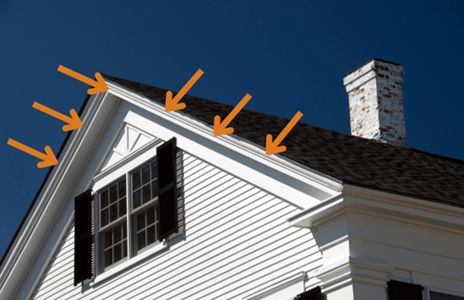
Functions of Fascia:
- Supports the Gutter System: The fascia board serves as the primary attachment point for gutters, ensuring they stay securely in place and function properly.
- Protects the Roofline: Fascia prevents moisture from entering the roof structure by sealing off the edges of the roof, where water and debris can otherwise cause damage.
- Enhances Curb Appeal: Though fascia has a practical purpose, it can also contribute to your homes curb appeal, especially when paired with decorative trim elements along the roofline.
Find out how a gutter apron prevents water damage and prolongs the life of your roof.
Key Difference between Trim and Fascia
Now that we understand what trim and fascia are, let’s explore the key differences between the two. While trim and fascia are both essential to your home’s exterior, they differ in both function and placement:
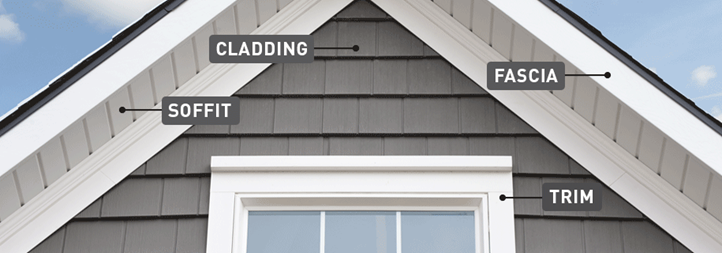
- Trim is primarily decorative, framing windows, doors, and corners of the house. It adds visual interest and hides seams between materials.
- Fascia, on the other hand, is structural and plays a critical role in the roofline. It supports the gutter system and helps prevent water damage by sealing the edges of the roof.
Materials Used for Trim and Fascia
Both trim and fascia come in a variety of materials, each offering its own advantages. The material you choose will affect the durability, appearance, and maintenance requirements of these components.
Trim Materials:
- Wood: Traditional and timeless, wood trim offers natural beauty but requires regular maintenance to protect against rot and weathering.
- Vinyl: Low-maintenance and durable, vinyl trim is resistant to weathering and comes in a variety of colors and styles.
- Composite: Made from a mix of wood fibers and plastic, composite trim offers a good balance of aesthetics and low maintenance.
- Aluminum: Lightweight and resistant to corrosion, aluminum trim is a great option for areas prone to high moisture.
Fascia Materials:
- Wood: Wood fascia is a traditional choice but requires regular painting and maintenance to prevent rotting.
- PVC: PVC fascia is low-maintenance, resistant to moisture, and can be easily painted to match the home’s color scheme.
- Aluminum: Lightweight and durable, aluminum fascia resists corrosion and offers long-lasting protection against the elements.
Explore the cost comparison and choose the right roofing option for your home.
When to Replace Trim or Fascia
Both trim and fascia can wear out over time, especially if exposed to harsh weather conditions. Here are some signs that it might be time to replace or repair these components:
When to Replace Trim:
- Cracking or Peeling: Over time, the paint or finish on trim may crack, peel, or fade, making it look worn out.
- Rotting or Warping: Wooden trim is susceptible to water damage. If you notice rot or warping, it’s time to replace it.
- Insect Damage: Wood trim can attract insects, such as termites, which can cause significant damage to the material.
When to Replace Fascia:
- Sagging or Cracking: If the fascia is sagging, cracking, or showing signs of wear, it can lead to problems with your gutters or even cause water damage.
- Water Damage: Fascia that is compromised by water damage may allow moisture to seep into the roof and attic, leading to further issues like mold or mildew.
- Detached Gutters: If your gutters have become loose or detached from the fascia, it may be a sign that the fascia needs repair or replacement.
Maintaining Trim and Fascia
Proper maintenance of both trim and fascia can prolong their lifespan and ensure that your home remains functional and aesthetically pleasing. Here are some essential tips for maintaining both:
Trim Maintenance:
- Inspect Regularly: Check your trim for signs of damage, including cracks, warping, or peeling.
- Clean: Wash trim regularly to remove dirt and debris that may accumulate and cause staining or damage over time.
- Repaint as Needed: If your trim is painted, touch it up as needed to maintain its appearance and protect the material underneath.
Fascia Maintenance:
- Gutter Care: Since fascia supports the gutter system, it’s important to keep your gutters clear of debris. Clogged gutters can put unnecessary strain on the fascia, leading to sagging or water damage.
- Check for Water Damage: Inspect fascia boards for signs of rot or water damage, particularly after heavy rain.
- Seal Gaps: Ensure that there are no gaps between the fascia and the roofline where water can infiltrate and cause problems.
Conclusion: Trim vs Fascia – Which is More Important?
Both trim and fascia are integral parts of your home’s exterior. While trim enhances the aesthetic appeal of your home, fascia plays a key role in maintaining the structural integrity of the roof and ensuring proper drainage. It’s important to maintain both components to protect your home from potential damage and to keep it looking great.
When it comes to choosing between the two, it’s not about which is more important — both play vital roles in home maintenance. Fascia keeps the roof protected and supports the gutters, while trim adds charm and elegance to your home’s overall appearance. By regularly inspecting and maintaining both, you can ensure your home remains in top condition for years to come.
FAQs
Q1: Can trim and fascia be replaced at the same time?
Yes, many homeowners opt to replace both trim and fascia at the same time, especially if they are experiencing issues with both. Replacing them together ensures consistency in appearance and functionality.
Q2: What’s the best material for fascia?
PVC and aluminum are both excellent options for fascia, as they are durable, resistant to water damage, and require minimal maintenance.
Q3: How often should trim and fascia be inspected?
It’s a good idea to inspect trim and fascia annually, especially after extreme weather conditions, to catch potential issues early.
Contact us today for reliable roof repairs, installations, and inspections. Your trusted roofing partner is just a call away!


Pingback: What are the Different Types of Roof Overhangs? | Sky Roofer